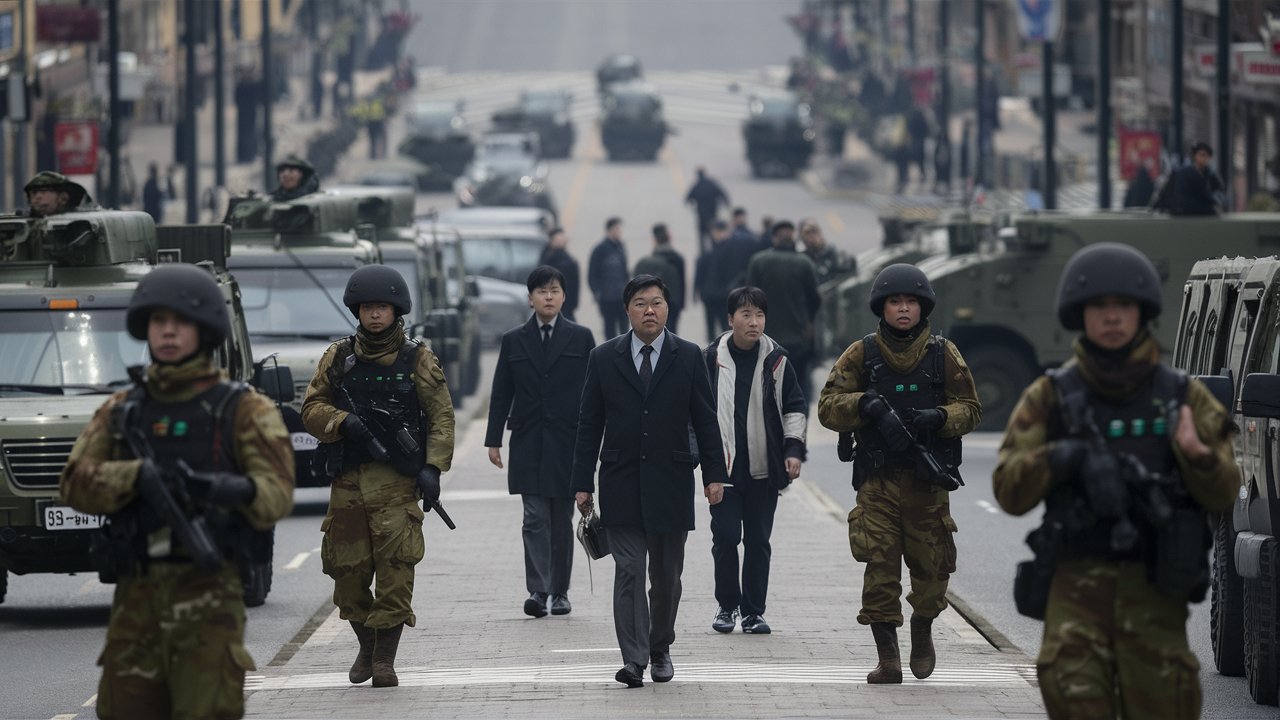
South Korea has made a shocking decision—declaring martial law in a move that has left the nation and the world wondering what comes next. Martial law is no small thing; it means the military takes over control, sometimes restricting people’s rights and freedoms. This bold action by South Korea’s president comes in the face of growing tensions, and it’s important to understand what this really means for the people living there and for the rest of the world.
Thank you for reading this post, don't forget to subscribe!
Why Martial Law?
To understand why South Korea would declare martial law, we need to look at what’s been happening recently. The country has been facing some serious unrest. Protests, political tensions, and growing instability have put the government on high alert. With public safety at risk, the president felt it was necessary to take drastic steps to restore order and keep things under control. Martial law is often used in times of crisis when the government feels it cannot maintain peace using regular law enforcement.
What Does Martial Law Mean for the People?
When martial law is declared, the military takes on a stronger role in maintaining order. It means that the usual civilian government and police forces may have their powers limited. In some cases, the military can control roads, shut down businesses, and even impose curfews. People may not be able to move around freely as the military could take action to prevent protests or demonstrations that are seen as a threat to stability.
For the citizens of South Korea, this could feel like a big change in daily life. Imagine living in a place where you’re used to your normal routine, and suddenly you can’t go to certain areas, or there are strict rules about when you can leave your home. It can be a time of confusion and fear for many. But it’s also important to know that martial law can be temporary, depending on how the situation develops.
How Does This Affect the Rest of the World?
South Korea plays a key role in the international community, especially when it comes to its relationships with North Korea, the United States, and its neighbors in Asia. This sudden shift could affect international politics, trade, and security. Countries watching South Korea closely may now wonder how stable the nation really is. Will this make the region more tense? Could it affect the economy? These are just a few of the big questions that people around the world are asking.
In a world where global connections are more important than ever, a major decision like this in South Korea can send ripples across the globe. It’s something that everyone, from neighboring countries to distant continents, will be watching carefully. The future of South Korea’s government, its people, and its role in global affairs could change depending on how this martial law plays out.
What Happens Next?
It’s hard to say what will happen next. Martial law may last for a short time or could extend if the government feels that it’s necessary. The military’s role in South Korean society is something that’s being discussed, but the country has always prided itself on being democratic, so this move has many people asking if it will stay temporary or turn into something more permanent. One thing is for sure—South Korea’s future is at a crossroads right now, and how the people and the world respond will be crucial.
Final Thoughts
In times of uncertainty, governments sometimes make decisions that are meant to protect their people, but these decisions often come with big consequences. Martial law in South Korea is a bold and controversial move that will shape the country’s future. Whether it’s a quick solution or the beginning of a longer struggle, the people of South Korea and the world will be watching to see how things unfold.

