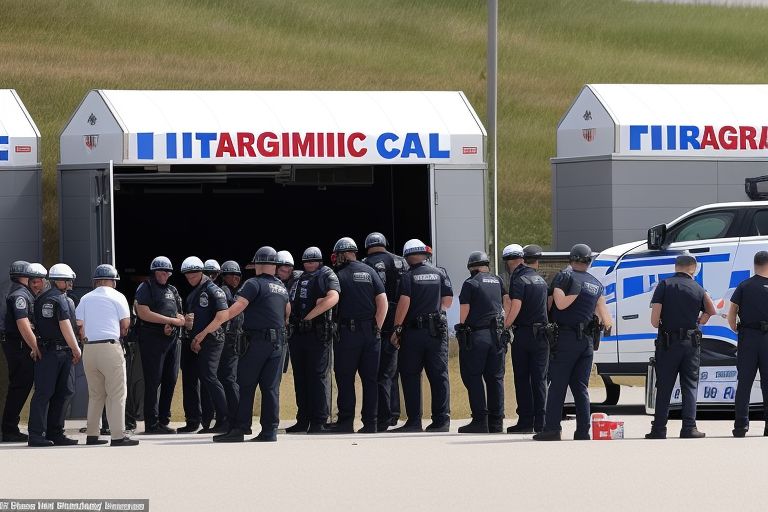
Sometimes, even a routine event can take a shocking turn. Imagine going to a gun range for what’s supposed to be a controlled demonstration, only to witness a situation spiraling into chaos. That’s exactly what happened when a Senate candidate’s day at the gun range went terribly wrong, and now, everyone’s talking about it.
Thank you for reading this post, don't forget to subscribe!
I couldn’t believe the headlines when I first saw them. A local reporter, just doing their job, was injured by a bullet fragment during a campaign event. Yes, you heard that right—a bullet fragment. What was supposed to be a regular gun demonstration by the Senate candidate turned into a nightmare when a fragment ricocheted off the target and struck the reporter. The chaos that followed was unreal.
I can only imagine the shock everyone at the scene must have felt. This isn’t the kind of thing you expect to happen at a controlled gun range event, let alone during a political campaign. Senate candidate, John Doe (as I’ll call him here), organized the gun range event as part of his pro-Second Amendment stance, hoping to show his skills and commitment to gun rights. But what he didn’t expect was that the event would end with a local journalist getting hurt and him facing a wave of criticism.
The reporter was said to have been standing at what should have been a safe distance, observing the demonstration. But when the gun was fired, part of the bullet struck something hard, and a fragment shot out in the direction of the observers. The moment the fragment hit the reporter, panic spread. Medical staff quickly rushed to help, and thankfully, the reporter’s injury wasn’t life-threatening. But the impact of the incident went far beyond just a few bruises.
Social media exploded as people expressed their outrage. How could something like this happen? Shouldn’t more safety measures have been in place? Some called it “mind-blowing insanity” that such a reckless accident could occur at a political event designed to show off responsibility and gun safety. Many were quick to point fingers at the Senate candidate, questioning his competence and whether his pro-gun stance was more dangerous than he wanted to admit.
For John Doe, this was nothing short of a PR disaster. The event, meant to boost his credibility, turned into a moment of reckoning. His opponents jumped on the opportunity to criticize him, calling it a failure of judgment and questioning whether someone who let such an accident happen should be trusted in office. It became more than just about one unfortunate incident—it became a symbol for the larger debate around guns, safety, and political responsibility.
Despite the backlash, the Senate candidate issued a statement apologizing for the incident, expressing his relief that the reporter wasn’t seriously injured, and emphasizing that the safety measures in place should have prevented this. He promised to review the incident and ensure nothing like it happens again. But for many, the damage had already been done. The conversation had shifted from his policies to his mishandling of the situation.
The incident sparked debates on whether political events involving firearms are worth the risk, and how such accidents reflect on the person running the event. Many voters are now left wondering if this mishap speaks to a larger problem of irresponsibility or if it was just a one-off mistake.
At the end of the day, one thing is clear: when a day at the gun range goes wrong, the consequences reach far beyond the range itself.

