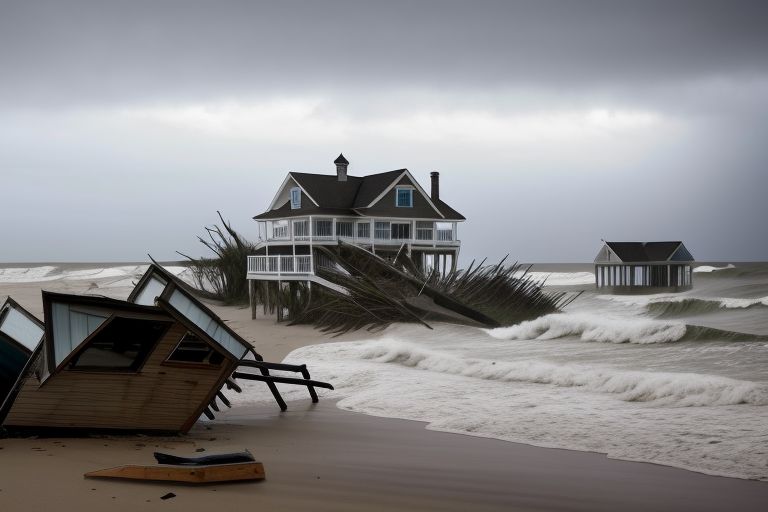
As I sat on the sandy shores of North Carolina, watching the waves crash rhythmically against the beach, I felt a sense of peace wash over me. The ocean always seemed like a friend, inviting and calming. But recent events have turned that serenity into a creeping sense of dread. I couldn’t shake the feeling that something was seriously amiss.
Thank you for reading this post, don't forget to subscribe!
Just a few weeks ago, the news hit like a tidal wave: three homes had crumbled on this very beach. It felt like a scene out of a horror movie—a sudden, shocking collapse that left families devastated and communities in disbelief. How could this happen in a place that seemed so idyllic? Was it merely the fury of nature, or was there something more sinister lurking beneath the surface?
I wanted to dig deeper and understand the roots of this disaster. After all, the ocean can be unpredictable, but I couldn’t help but think there had to be more to the story. As I spoke to locals, I uncovered a web of worries that ran much deeper than just weather patterns and erosion.
Many residents talked about the constant battle against nature. They described how rising sea levels and stronger storms had been creeping up on their homes for years. While most people assumed these homes were built to withstand the elements, it seems that many were ill-equipped for the changes taking place around them. Some of these houses had been constructed on sandy foundations, which, while beautiful, were incredibly unstable.
But the crumbling homes weren’t just a natural disaster; they were also a warning sign. I discovered that many homeowners had ignored crucial signs of wear and tear, relying on outdated advice and hopeful thinking. The truth is, most people are oblivious to the slow but sure destruction happening beneath their feet—until it’s too late.
In the aftermath of the collapses, engineers and experts came in to investigate. Their findings were startling. They revealed that the houses were not just victims of erosion, but also of a failure to adapt to the rapidly changing environment. As storms grew fiercer, many homeowners chose to ignore safety recommendations, opting instead to enjoy their beachfront view, believing that nothing could happen to their little piece of paradise.
The more I listened, the more I understood that this was not just a story of nature’s wrath; it was also a tale of human complacency. It was as if the beauty of the beach had hypnotized us, making us forget about the risks involved. I found myself thinking about how many people live in denial when it comes to the impact of climate change. The signs are all around us, yet we often choose to look away.
After speaking to residents and experts alike, I felt an urgent need to spread awareness. We cannot ignore the warnings any longer. The ocean may seem friendly, but it holds secrets that can turn deadly. It’s essential for homeowners in coastal areas to be vigilant, to take necessary precautions, and to listen to the experts who understand the real dangers lurking beneath the surface.
As I walked along the beach, the sound of waves crashing reminded me that nature is powerful and unforgiving. The crumbled homes stand as a solemn reminder of what can happen when we let our guard down. I hope that by sharing this story, I can help others realize the importance of preparing for nature’s wrath.
If we want to preserve our beautiful coastlines and the homes built upon them, we must act now. Ignoring the signs is no longer an option. Let’s work together to face the hidden disasters head-on, so that we can continue to enjoy the beauty of our beaches without fear.

