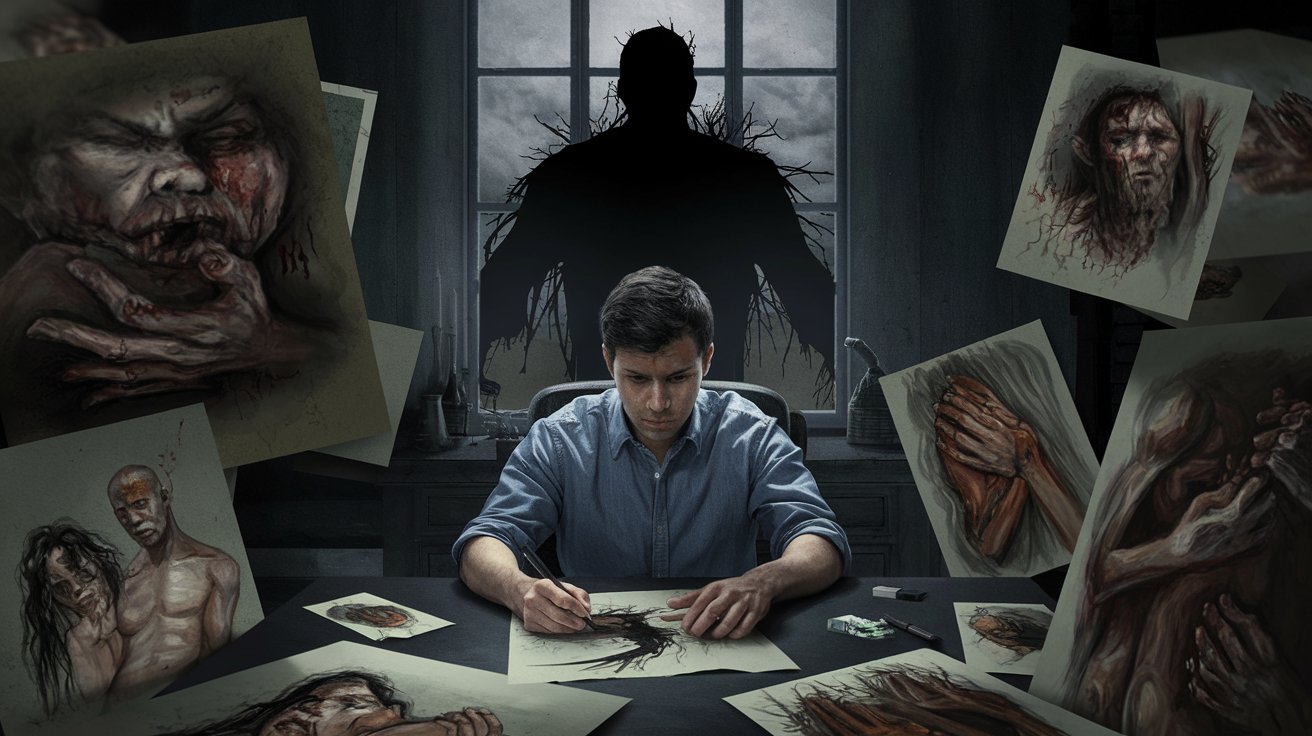
When I started watching the latest Netflix documentary about the Menendez brothers, I knew it would be intense, but nothing could have prepared me for the emotional rollercoaster that unfolded. Erik’s haunting drawings and Lyle’s chilling words reveal a side to their story that most people didn’t know or understand.
Thank you for reading this post, don't forget to subscribe!
For years, the Menendez brothers have been infamous for the brutal murder of their parents, José and Kitty Menendez, in 1989. The media painted them as two rich, spoiled boys who killed for money. But this documentary shows that their story runs much deeper.
It’s one thing to hear about abuse, but seeing Erik’s drawings of the trauma he endured hit me like a punch in the gut. Each sketch, each image, was a cry for help—a desperate attempt to express the pain he couldn’t put into words. Watching the documentary, you can’t help but wonder: what if someone had seen these signs earlier? What if someone had stepped in before things spiraled out of control?
Then there’s Lyle, who had always come across as the stronger, more stoic brother. But his words in this documentary sent chills down my spine. “I would much rather lose the murder trial than talk about our past,” he said, a sentence that reveals the heavy weight he’s been carrying. Think about that for a second. He was more willing to face a lifetime in prison than to relive the horrors of his childhood. What kind of pain does someone have to endure to feel that way?
The documentary delves into their childhood in a way that makes you question everything you thought you knew about the case. Yes, they did a terrible thing, but the abuse they suffered at the hands of their father, José Menendez, adds a heartbreaking layer of complexity. This wasn’t just about money or power—it was about survival.
I couldn’t help but feel a deep sense of empathy while watching Erik’s artwork unfold on screen. Each piece seemed to scream with the agony of a boy who was emotionally and physically tortured. His father’s abuse left deep scars, and these drawings were his only way of dealing with it. In a way, they were his silent screams.
Lyle’s confession, on the other hand, made me realize just how much they had both been through. Imagine being so traumatized that you’d rather be labeled a murderer than admit to the abuse you endured as a child. His refusal to talk about their past during the trial wasn’t about hiding the truth—it was about protecting himself from reliving it.
The Netflix documentary doesn’t ask for forgiveness for the Menendez brothers’ crimes, but it does force us to see them as more than just killers. It sheds light on the abuse they suffered, which was previously overshadowed by the media frenzy surrounding their trial. While nothing excuses the violence they committed, it’s impossible to ignore the role that their upbringing played in shaping the tragedy that unfolded.
As I finished the documentary, I was left with a mix of emotions. Anger at their father for what he did to them. Sadness for the brothers who lost their childhood. And a deep sense of curiosity—how many more stories like theirs are out there, hidden beneath the surface, waiting to be told?
The Menendez brothers’ Netflix doc isn’t just another true crime series—it’s a powerful reminder that there’s always more to the story than what we see on the surface. Erik’s drawings and Lyle’s words challenge us to dig deeper, to understand the layers of trauma and pain that lead people to make unimaginable choices.

